Apple, iApologize
Jumping over to Apple was easier knowing nothing could measure up

If you know me, you know that I greatly disliked Apple products. For plenty of years I have gone out of my way to communicate exactly how I think their products obtuse. I never saw Mac as user-friendly compared to Windows, they never grasped the gaming world, and Apple’s devices are over priced for what you get. Years ago all of these points were true, but things have drastically changed.
Now that I have my hands on my first Apple device, the latest 13” MacBook Pro, I am beside myself, mourning the side of me that fell to the Space Gray side. So what got me to change my mind? What turned me from someone who openly mocked MacBook users into a person who only wants write a manuscript while sipping coffee in the local coffee joint? A lot, and it started last year.
At the start of the pandemic I became a freelance writer after losing my job. I did a couple of pieces and eventually landed a career at a major NYC photo, video, and tech retailer. I am a web content creator for their website where I draft original pieces on enterprise and consumer technology. Since I work out in the city, I get about two hours a day of commuting and I wanted to use that to my fullest, so I went out on the hunt for a new personal device and my heavy Acer Nitro 5 just wasn’t cutting it.
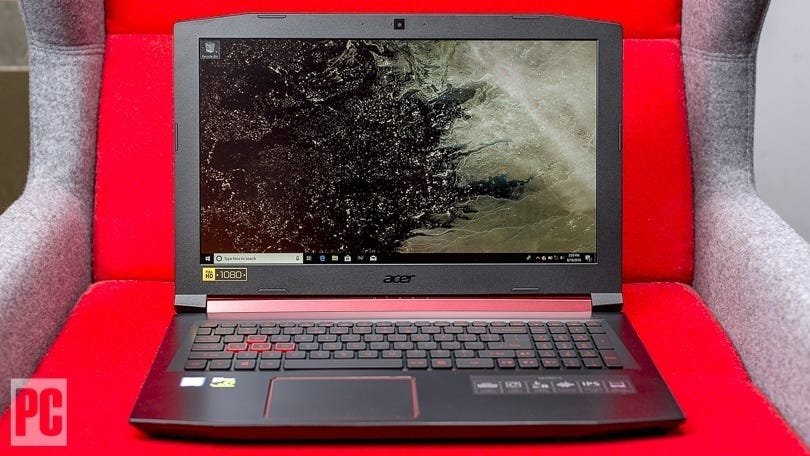
Picture curtesy of PCmag.com
You might have heard this story before in one of my previous posts, but I wanted a device that felt lightweight enough to carry with me. As much as I love it, my 15.6” Acer Nitro 5 gaming laptop just wasn’t doing the trick. Big and bulky size leads to a heavy 5- to 6-pounds of additional weight. Plus, as much as I love the Nitro 5, this is not a device you should really be traveling around with unless to a friend’s house for a LAN party.
The Search Begins
I searched far and wide for this magical device that I had in my head. Lightweight, comfortable to type on, and something with good enough power that will last. Because of what I do for my day job, I would often spend some downtime looking at devices, picking, choosing, and then comparing. It was up to a few decent models from Gigabyte, ASUS, and MSI. The problem was, the closer to the form factor that I wanted, the more expensive they became.
On the train, a 15.6” screen needs to be bent in a bit if I don’t get one of the 4- or 6-seat sections where I can truly spread out. On the two- or triple-seat areas, the top of the screen hits the chair and I have to type with a really tight view of my work. This caused me to look at 13” displays and something that charges via USB Type-C (since all my cables were that). It also needed to be at least half the weight of the Nitro 5. These were the three most important aspects when it came to the form factor. Performance could vary but most devices seemed to stick with the same outlook, 16GB RAM, at least 256GB storage, and some sort of display that looked nice. A Ryzen 5 or Core i5 processor is all I really needed for what I wanted to do.
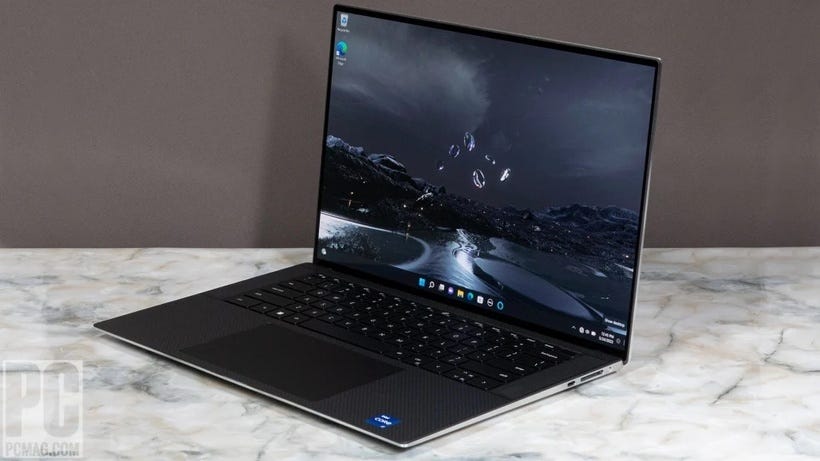
Thank you again to PCMag.com for a solid picture of the Dell XPS
Knowing what I wanted and the configuration, I saw the prices and disappointment immediately followed. I was left with a few Lenovo, HP, and Dell systems all ranging in the $1699 to over $2,500 area. I thought it was absolutely insane to have these prices. I thought to myself, “These are Apple prices.”
Planting the Apple Seed
Fast forward a couple of months to April where I am in Boston for PAX East. I meet with someone for lunch and to talk a bit of business. She says to me, “You’re a tech guy, I have a MacBook that just started to act a bit slow. What should I upgrade to? Should I stick with Mac?”
With my 4-year old Nitro 5 currently in my backpack, I ask her when she got her MacBook. I was surprised when she told me that it was originally purchased almost 10-years ago. This really planted the seed because I wanted longevity. If I could get a device that lasts up to 10 years, I wouldn’t need to get another one unless something major changed.
This wasn’t the only time I experienced this situation either. Someone else who is a MacBook user posed the same question to me. This time with a twist, they asked me, “Why should I stick with Apple?”
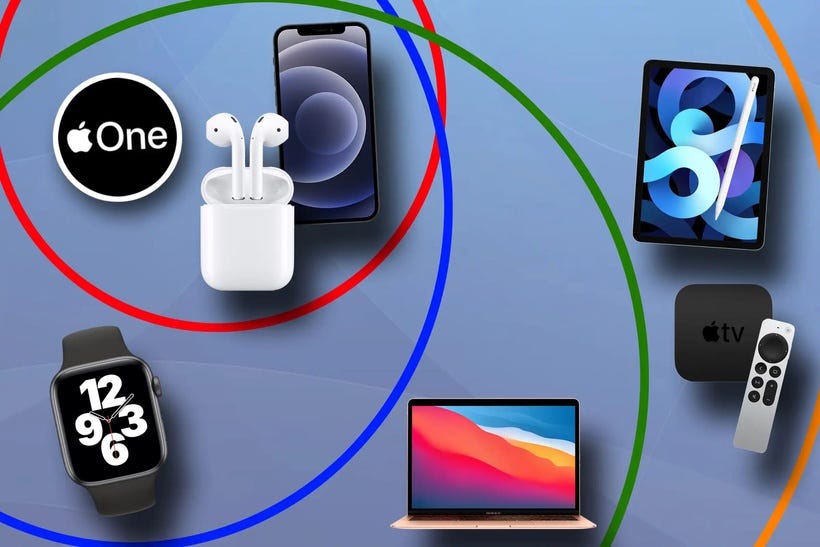
Photo credit to Macworld
In turn, I asked them what phone do they use, what tablet do they have, do they have an Apple Watch? How often do they use iCloud? What accessories do they happen to own at home?
I asked these question because Apple has this amazing ecosystem that just works. Microsoft tried it with Windows in the past but it never really took off, at least, not on a consumer level. Apple beat Microsoft to the punch, refining the way that devices interact with each other in a way that is actually incredibly impressive, coming from a primarily Windows user.
The reason why I asked all of those questions is because I find that most users who stick to one platform and switch end up missing features or experience massive frustrations with learning a new system. There is some regret and buyer’s remorse when some folks realize that the new device ends up not working as thoroughly as they thought. Some people do want change, and I respect that, but there is a point where change is less important than stability, and depending on your flow, you should always take stability.
Looking Through the Windows
To dive back into the Microsoft thing for a second, I worked for them years ago in the 7th Microsoft Store to ever open. We were fairly close to our competition, an Apple store. We were actually friends with those guys and they were really cool people. We joked back and forth because back in 2013, Apple was that overly expensive and pompous company, and they knew it. The one thing that they really laid into us on was the phones. Microsoft never really developed their own hardware, as they were a software company so they relied mostly on third parties to make the cool computers and phones.
To go off on a sub-tangent, yes, they had the Xbox console but that is an entirely different scenario. From the inside, I can tell you that gaming seemed like a main focus if you only paid attention to the Xbox brand, but to Microsoft in the past it was just another platform and never their main focus. Things have changed since then as we see now, but I digress.
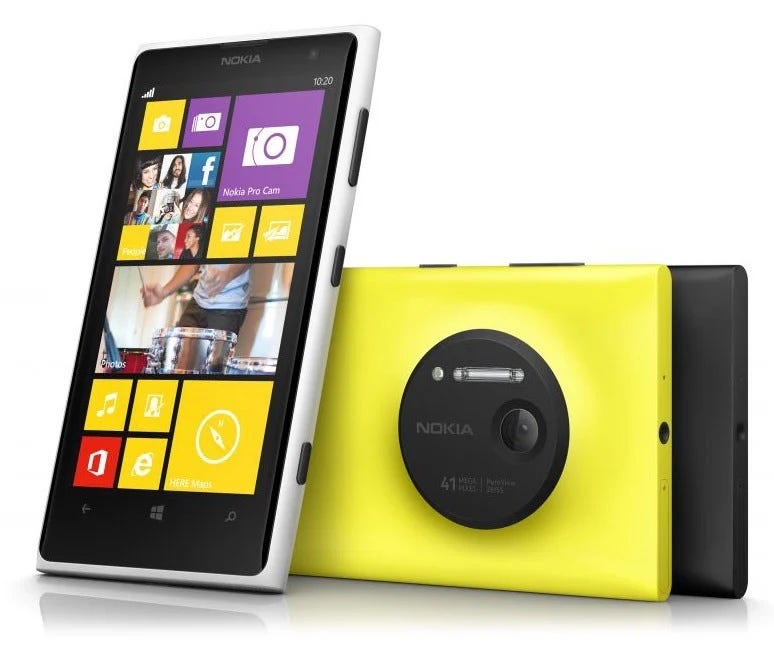
Photo from PCMag.com again
The problem was right up until the Surface line released, Microsoft never had a real physical presence in the world like Apple did. I talked about this before but I need to hammer in the concept that Apple, for better or worse, holds the keys to the mansion. All of their products are handled by them on the hardware and software side. As of recent with the introduction of the M1 chips, Apple took their development to a new level, giving them full control over how data and throughput is managed. This is a new era for Apple and it is absolutely for the better especially learning how Intel’s latest 12th Gen processors are a bit awkward to use.
It didn’t help that when Microsoft outsourced their products to third parties, they would all take their own approach to design. This was prevalent in the phone market where the Nokia Lumia was the flagship device but was quickly outpaced by the latest iPhone or Android device. Microsoft simply couldn’t keep up on the hardware side, so they scrapped the Windows Phone concept entirely some years later while keeping on with the Surface line of tablets and laptops (which began to also creep into Apple price territory).
This all leads to Microsoft now, which has a very splintered ecosystem that is based on software rather than hardware. I can get programs like OneDrive on my iPhone or Android device. There are no more barriers and I think this is what Microsoft does well, they have opened their gates to have more people experience their software, after all, they are a software company.
While Microsoft regressed a bit for the better, Apple decided to expand their footprint from the trifecta of phone, computing, and tablet; they embraced consumer technology more. Several devices like the AirPods, Apple Watch, and even their AirTags are just a few more devices that work within their ecosystem and are designed to keep you within it. Removing yourself from the ecosystem involves getting a new phone, a new notebook, a new tablet, and so on. This also means that programs and utility is split off because no one else has created this level of unification between devices like Apple. Samsung comes close but there are still a bunch of layers of inconsistency of communications between these devices. Windows and Android devices still do not communicate as easily as an iPhone and MacBook Pro.
The Realization
As time passed, I realized that I am actually considering an Apple device. I wanted to switch over to the iPhone when the 13 series was revealed for a litany or reasons I previously discussed. Now they have this really ugly yet cool green color and I really, really want that model. Why not dip my foot into the Apple world?
One day I looked at my company’s store and I saw the M1 MacBook Air for $900. Yes, you read that right. For many years I made the joke that Apple was too expensive and they priced themselves into a luxury market. Seeing Dell and Lenovo systems getting up to $2500 price tags delivered a double-take like no other.
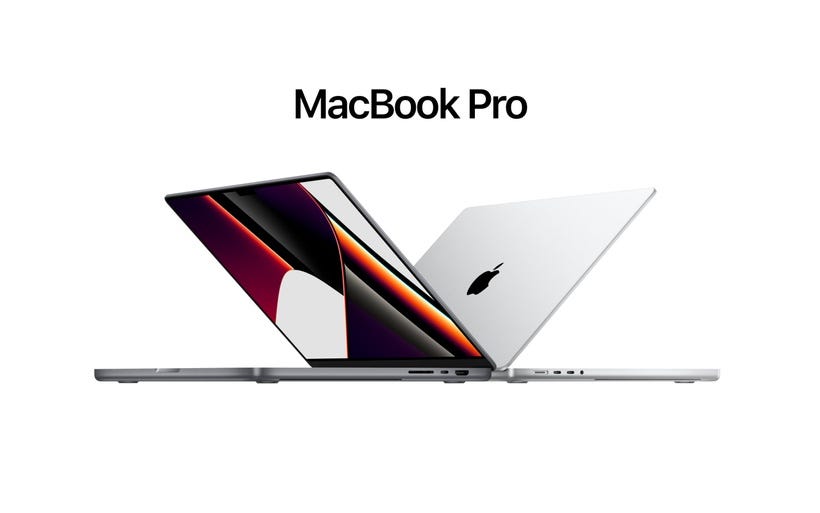
Granted, $900 is the baseline model that required more upgrades to be where I wanted it, but you cannot simply ignore how affordable that is in comparison. As expected, it would be more money but it still was cheaper than what other companies delivered. After so long, Apple has finally become market friendly to almost everyone. It doesn’t stop there either as I put in about two weeks of research into which device would be perfect for me. I wanted an endless amount of videos, read reviews, and absorbed so much information that the only thing YouTube recommends to me anymore is Mac-based videos.
I discovered something about Apple’s philosophy while doing my research, they have a unified look and tiers that are simple to understand while also having a bit of complexity to them. Please hold onto your horses as I do my best to explain.
The Apple Philosophy
The MacBook Air is designed for the typical consumer market who wishes to check email, watch media, and partake in Apple’s ecosystem. Apps and programs all work and it is a lightweight form factor. Then you have the MacBook Pro lineup that is all designed for productive folks such as myself and that you have in the 13” MacBook Pro. There’s also greater power in the 14- and 16-inch MacBook Pros which utilize stronger processors to deliver performance suitable for creators working with resource-demanding utilities. The problem arises when you start adding to the base specifications.

The MacBook Air starts to get pricy when you add some upgrades making you consider spending just a few hundred dollars more and get the 13” MacBook Pro, which is only a few hundred dollars cheaper than the 14” MacBook Pro and you get a better screen and a few more ports. This power creep is ingrained within Apple’s system, making you spend as much as possible or at the very least, make you go “Screw it, I’ll spend the $2k on the 14” and stop the madness!” I am speaking from experience.
I didn’t do that. Instead I got incredibly realistic about my purchase and considered the real-world qualifications. I didn’t need to spend that much on the 14” MacBook Pro because I am not editing 4K video and if I were to edit, which I will one day, it would be 1080p because that is the type of camera I have. Port wise, I need a USB Type-A port for a microphone which requires a USB hub that tend to include SD card slots, so I don’t need to worry about having those. As far as the screen quality goes, that doesn’t mean much to me and neither does the webcam or onboard speakers.
I started to lean more towards the MacBook Air M2 model as it is just releasing, but I discovered something that I never thought I would have to consider: thermal performance. I am going to be using the MacBook Pro for several hours at a time and at some points I will need an active cooling solution to manage thermals. Apparently, the MacBook Air suffers from performance throttling when operating resource-heavy programs, causing a lot of heat built up.
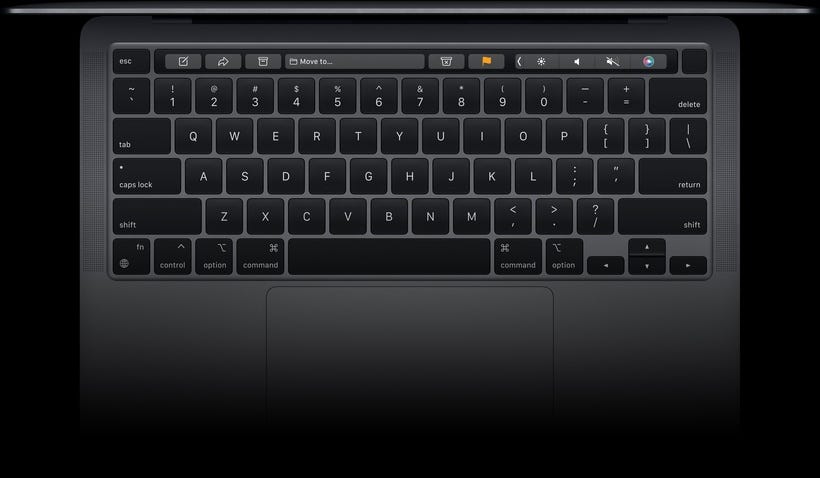
So here I am, on the train, typing away on my 13” MacBook Pro and I find the experience to be quite enjoyable. As silly as it sounds, I really enjoy the TouchBar despite the limited use. It adds a layer of personality and plus, I don’t really use the function keys, so this does the job fine. I have a slew of other things I like but perhaps I will leave that for another day.
After several weeks of use, I am finding that I am meshing incredibly well with the operating system. Sure, I have only been diving into it on the surface level, but the ease of use is something I really enjoy. It is smooth, quick, and there are a few concepts that work very well compared to my Windows 11 experience. TouchID is great, the keyboard is the best thing I have ever typed on in my life (no more Butterfly keyboards too). Some gestures and buttons I need to get used to (such as copy and paste elements) but that isn’t on the design, that is on me.
I don’t know if I am still in the honeymoon phase, but so far this device has hit that sweet spot I wanted: lightweight, powerful, portable, and comfortable. I am told that the experience changes when I get a second Apple device, and with my eyes on that ugly green iPhone, I look forward to seeing my world change.
So, Apple, after all of these years of bashing your platform, I need to formally state this: iApologize.